

Laser Induced Breakdown Spectroscopy System
- Product Code: Laser Induced Breakdown Spectroscopy System
- Availability: In Stock
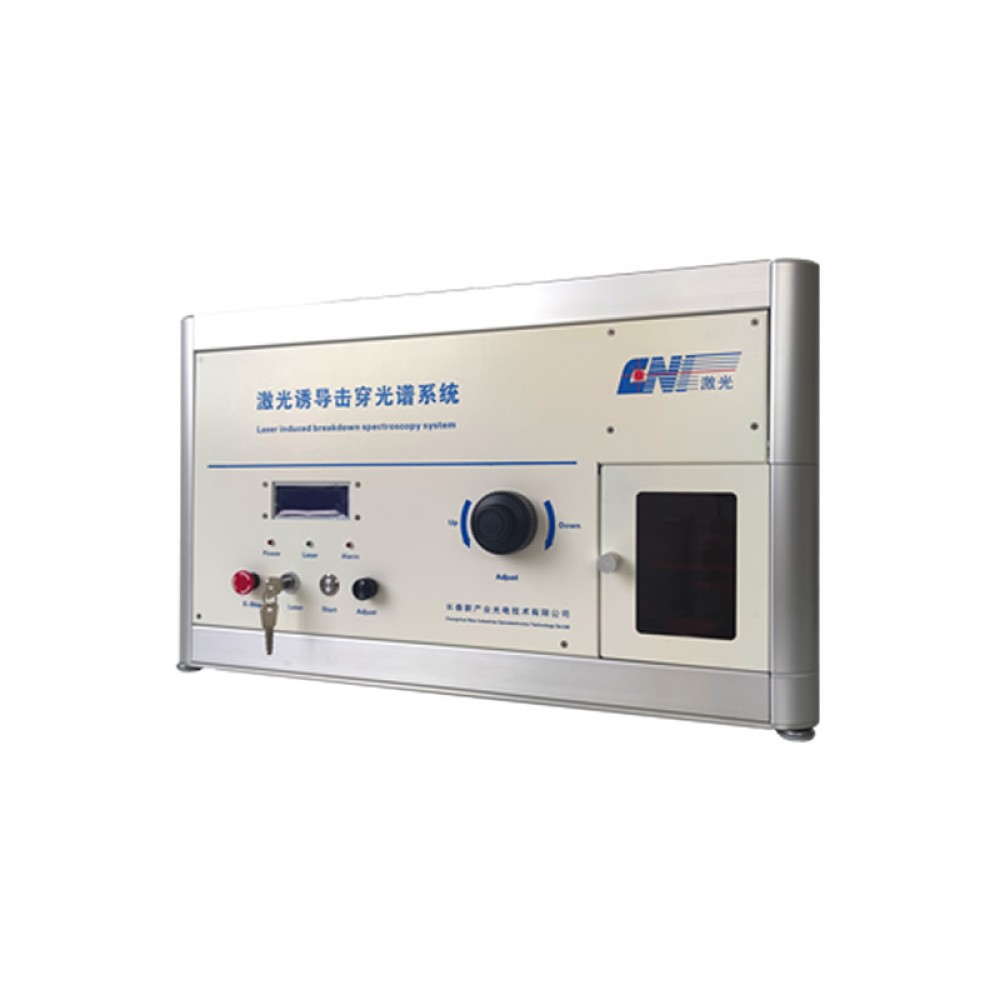
Laser Induced Breakdown Spectroscopy (LIBS) System
Laser Induced Breakdown Spectroscopy (LIBS) is an advanced analytical technology that utilizes a pulsed laser to ablate a material surface and generate high-temperature plasma. The emitted light from the plasma is analyzed using emission spectroscopy to qualitatively and quantitatively determine the elemental composition of the sample.
In this technique, transient plasma is produced through the interaction between a high-power density laser and the material surface. The atomic and ionic emission spectra generated within the plasma are collected by an optical system. By analyzing the spectral data, accurate identification and measurement of chemical elements can be achieved.
The CNI Laser Induced Breakdown Spectroscopy System features a compact, fully integrated design that ensures fast, stable, and user-friendly operation. The system allows direct sample analysis without additional collection or preparation processes, enabling rapid multi-element detection in real time.
Designed to operate in harsh testing environments, the system supports the analysis of solid, liquid, gas, and slurry samples. It is widely applied in environmental monitoring, alloy analysis, ore detection, and various laboratory and industrial applications, making it a practical and reliable analytical instrument.
Key Features
• Coaxial design of excitation optical path and acquisition optical path
• Internal control and external control dual operating modes
• Synchronous Q signal output
• Two-dimensional precision adjustment platform installed in the sample chamber
• Adjustable lifting platform for samples of different sizes
• Integrated system structure with simple and intuitive operation
| Solid Substance LIBS Detection | Metal sample | High energy pulse laser E:100μJ~10mJ | The sample has good thermal conductivity, and the laser energy is high enough. |
Non metallic multi component sample | Low frequency high energy pulse laser E:10mJ~100mJ | The thermal conductivity of the sample is not good, the high temperature will lead to chemical reaction or burning. | |
| Liquid Substance LIBS Detection | Liquid sample (e.g., sea water, industrial waste water detection, etc.) | High energy pulse laser E:100mJ~500mJ | Due to the plasma shock wave action, the liquid level fluctuation will affect the detection stability. |
| Gaseous Substance LIBS Detection | Gases and aerosols (e.g., air, air pollutants, automobile exhaust, industrial waste gas, etc.) | Low frequency high energy pulse laser E:500mJ~1000mJ | Gas breakdown threshold is high, need high energy laser as the excitation light source. |


